Doctors · 4 min read
My medical team that gave me tangible hope
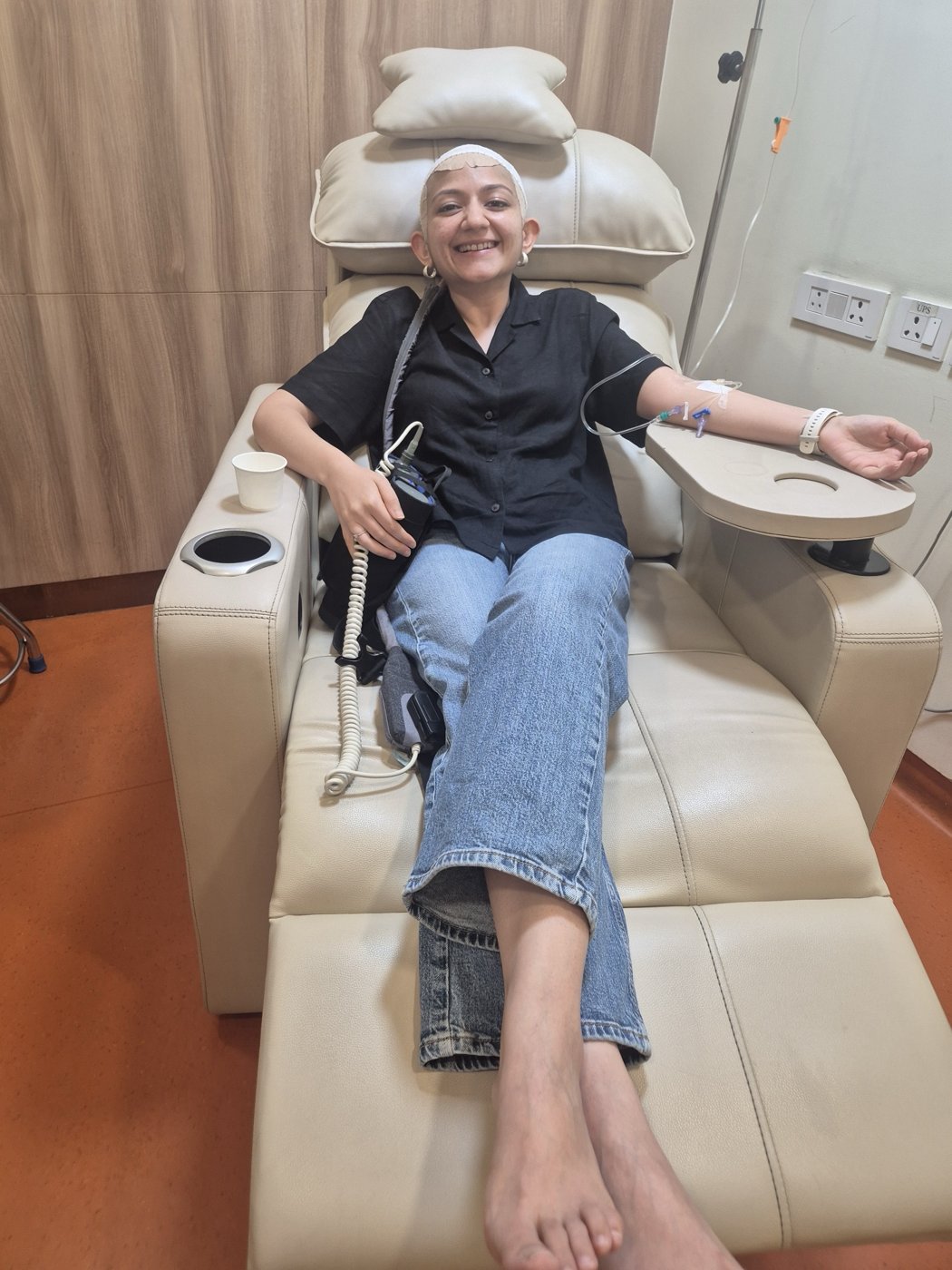
In the early days post diagnosis, we did have some rough experiences - one where a doctor kept sending me out of the room to discuss 'difficult' matters with my family - apparently, a 30 year old woman was incapable of dealing with a diagnosis of a terminal disease. Another instance which nearly broke me - where I was asked, what took me so long to figure this out and why I didn't get myself checked out sooner. Of course I cried my heart out at the time, a mix of anger & sadness - but then I knew I had to pull myself together and put it all behind me.
These experiences also thankfully helped me realise how important every member of my medical team would be. I made a decision to take control of my course of treatment and I was lucky to be able to make that choice. My family researched thoroughly - we asked doctors multiple questions, sought second opinions and built conviction before we moved forward. I realised I needed a holistic approach, including not just standard of care, but also physical, mental & emotional wellbeing and a medical team that resonated with that.
My oncologist was exceptionally positive. I recall the moment I knew he would be my primary doctor - in our first conversation itself, he mentioned that based on the location of my tumour, it may eventually spread to the frontal lobe and I may start to speak random things or forget small things - but he told me those were going to be speed bumps along the road, nothing I couldn't cross over. My husband and I could work together to develop cues and signals to tell me when it was happening and I could work and train on fixing it. That approach made me feel incredibly empowered - I was not being told all would go downhill from there, instead, it was simply stating, whatever obstacle may come, we will find a solution together.
It was not a logistically easy choice to make, my oncologist was based in Delhi. While my parents lived there and it was of course my family home, my own home was Bangalore - my husband and I lived and worked there. It was challenging to travel in between treatment, but I felt quite strongly that this decision had to be prioritised. That deep trust in my doctor was critical to get me through. While he was exceptionally busy like most good doctors in our country, he was also unbelievably patient. He would explain the logic behind each treatment choice, possible risks in experimental therapies, at the same time not shying away from them, keeping check on my overall wellbeing, and all throughout, actually engaging with my family and me, answering all our questions.
Other doctors in my team shared a similar energy. My secondary oncologist in London who had more than 20 years of experience with brain tumours approached matters similarly, advising us to just act based on my situation in the present. He also engaged with us and discussed what actions we could explore in case there was a recurrence. In fact, even with my nutritionist, things felt very real. In one of my initial conversations with her, I'd asked if she had any GBM patients who'd lived beyond a couple of years, and she told me she'd had at least a couple, and that too much older people - so there was no need to focus on the dire statistical prognosis. While they were all positive, there was no irrational exuberance and it was only a very pragmatic approach of addressing every challenge that surfaced in the best possible manner, one step at a time. These were the people who truly gave me enough logic and rationale to be able to hold on to hope in a more tangible manner.
← Back to all lived experiences