Surgery · 6 min read
The Awake Craniotomy
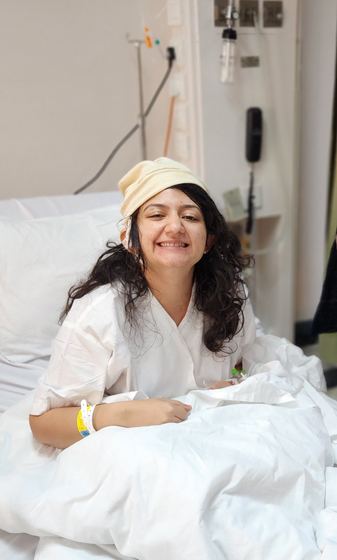
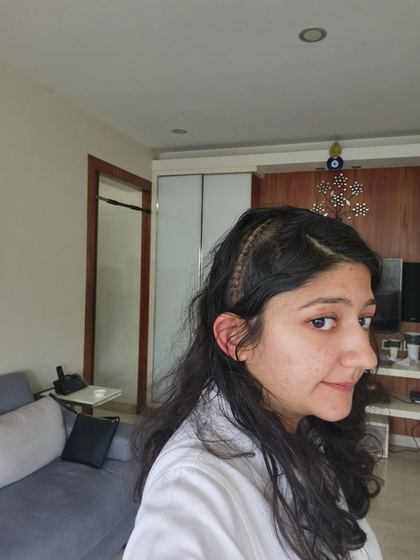
Because of the location of my tumour in the right parietal lobe, I needed to be awake during my surgery, the surgeon had to be very careful that my speech and motor function wouldn't get impacted during the resection and being awake would help that.
I started by joking with my family, I've seen it on a TV show - I knew what it is, to some extent at least, and the craziness to expect. I was to remain Nil by mouth for about 8 hours before the surgery but due to delays with the schedule, that ended up becoming 15 hours. After they wheeled me into the OT, they removed my top and covered me with a hospital bedsheet. I started shivering uncontrollably - the doctors immediately put a hot blanket underneath me and I became fine. A section of my hair where the incision was to be made was shaved off. I was injected with local anaesthesia injections at 8-9 spots around my forehead so that when they drilled into my skull, I'd feel the pressure but not much pain. I was to lie on my left side throughout and remain alert.
I was told that intermittently, the surgeon would ask me to perform certain movements to check on my motor function. I'd need to open and close my left fist several times and move my left foot up and down, then relax. Test and release…on repeat.
For the next 4 odd hours, I heard drilling, scraping and flushing noises and remained absolutely still, complying diligently with the instructions on movement. The anaesthesiologist was very kind and kept egging me on, telling me I was doing really well. I'd started to get exhausted and my left hip started aching. After bearing it for a while, I asked if I could just move an inch and readjust, the team paused for a few seconds and let me. A little while later, they asked me again if I wanted to take a break, but I was just keen on getting the tumour out as soon as possible so I pushed forward.
Then finally, after what felt like a very long time, I felt acute pain and tried to ask the anaesthesiologist by my side, how much longer. With all the loud noises, it took me several attempts before I was able to gather all my energy to finally be audible to her. I told them, I was fine, but just needed an estimate on how much longer did they expect to finish in. She said it was the last mile, just another 15-20 minutes. That was enough for me to pull myself through that last stretch with renewed vigour on my movements. It ended soon after and I was told the surgery went well. I'd been told earlier on that they'd be forced to stop if I had a seizure during the surgery and may even have some loss in motor function if they needed to resect certain parts - so I was extremely happy they could complete the surgery without any challenges.
It was a challenging night in the ICU. I had an intense headache after the surgery due to the inflammation. While I was given a painkiller, it didn't help much, what would help the doctors told me was the diuretic they started me on. It would make me pee every hour so as to release the pressure build-up in the brain. I was told I had to make do with using a diaper or a bed pan to relieve myself, I chose the latter. A short visit from my husband was enough to get me through the night. Thankfully, a few hours later, I was stable enough to be moved back to the room. While under observation the next day, I experienced some pain in looking towards my left side and also opening my mouth wide. My surgeon mentioned this was normal since my right brain had been operated upon and the anti-inflammatory meds would help. I was out of the hospital in 5 days end-to-end and I was fortunate for that.
For almost a month after, I found it hard to sleep properly, I'd keep waking up at odd times and then was unable to fall back to sleep. I realised, I needed to let out the gory details of the surgery to be able to let go. A session with my therapist helped and she told me to pen it all down, since I just didn't feel like talking about those details with my family, it felt unnecessary for them at that point. This, combined with a natural herb I was suggested by my nutritionist before sleeping, and I finally started sleeping again.
← Back to all lived experiences