Strength · 5 min read
Losing strength & rebuilding
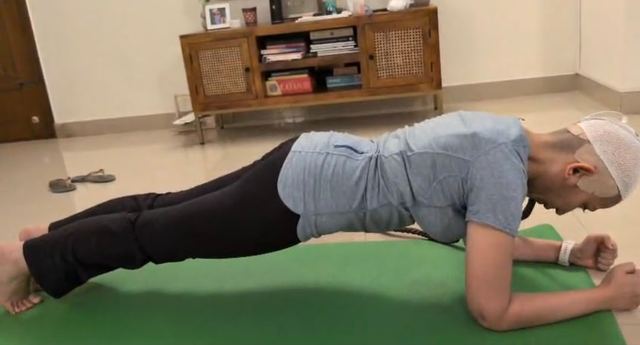
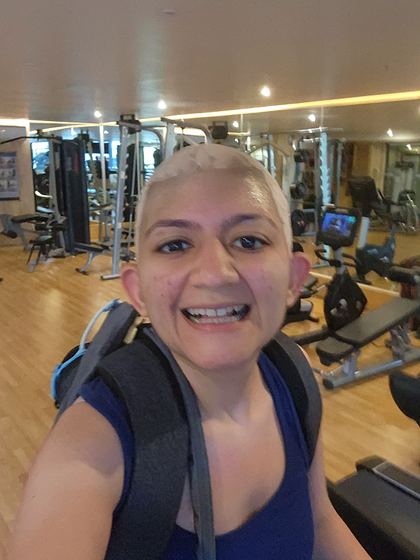
My radio-chemotherapy treatment started within a month of my surgery and I decided to try my best to stay active throughout those 6 weeks with regular walking, meeting my daily target of around 10k steps almost everyday. My doctors had no concerns on me remaining active. I had to be careful about staying away from infections so I walked within the house itself - from one end to the other, sometimes circling rooms. My family, watching me, would find it amusing sometimes seeing me pacing like that, but it became that one thing under my control even when so much was not. It also made me feel pumped during a period that was very mundane, with hospital visits 5 times a week.
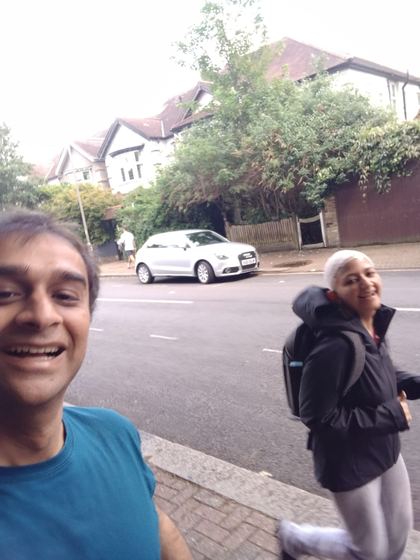
I didn't anticipate how different things would become once my adjuvant chemotherapy began a month later. I could no longer demonstrate similar control over my body. I did 13 chemo cycles, spread over 15 months. Chemo days were challenging, every subsequent day of each cycle got harder, and I would feel my energy deplete completely. While in the first couple of days of the cycle I would usually be able to work from home and move around a little, for the next few, I'd end up having to rest for longer durations. Thankfully, with the food plan suggested by my nutritionist, I would feel myself recovering within 3-4 days of the cycle ending and I made the most of those non-chemo days. I would try to do some form of light exercise to keep my body moving and improve blood circulation. I had always enjoyed running, so on days I felt stronger, I'd go for a run instead of just the walks.
I was able to manage this routine for the first 6 months of chemo. Then unfortunately, in Sept'24, during one of my runs, I tripped over a loose tile and had a hairline fracture in my left hand. With the continued chemo, my body had become much weaker and took several extra weeks for a full recovery. I was of course immensely frustrated, but my doctors reminded me that it could've happened to anyone and I shouldn't blame myself. While I didn't really regret it since running gave me the joy of freedom, the long recovery made me choose to avoid it till after my chemo ended - I didn't want to take a chance again. For the next few months, I had to stick to just my walking targets instead.
Our travel for vaccine treatment had also been significant in parallel with the Chemo. With every passing month, I became acutely aware of just how weak my muscles were getting. I could barely lift my suitcases and shove them in the overhead bins on planes, I had to inevitably ask for help. While my folks would tell me I had to cut myself slack and I would agree at times, it would just be extremely frustrating given how independent I had previously been.
Once my chemo finally ended in May'25 and I had recovered for a couple of months thereafter, I decided to start a holistic training program which would help me not just regain the muscle mass I'd lost, but also build back my stamina. Under oversight of a trainer, I slowly started with some resistance band exercises. It would often give me muscle pain and after advice from a physiotherapist, I realised that it was a chicken and egg scenario. I had to remain patient and keep at it. I started with 3 days a week - some strength training exercises, yoga and some running, and finally got to a point when I was able to workout almost 6 days every week. I hoped the results would gradually start yielding and after 6 months of consistently showing up, they finally did. I could climb up two flights of stairs with my luggage, without any help, my aches and muscle stiffness that used to surface every other day, dramatically reduced. It felt so good to finally reclaim some of my strength - felt like I'd finally made it.
← Back to all lived experiences