Optune · 6 min read
Living and Travelling with Optune
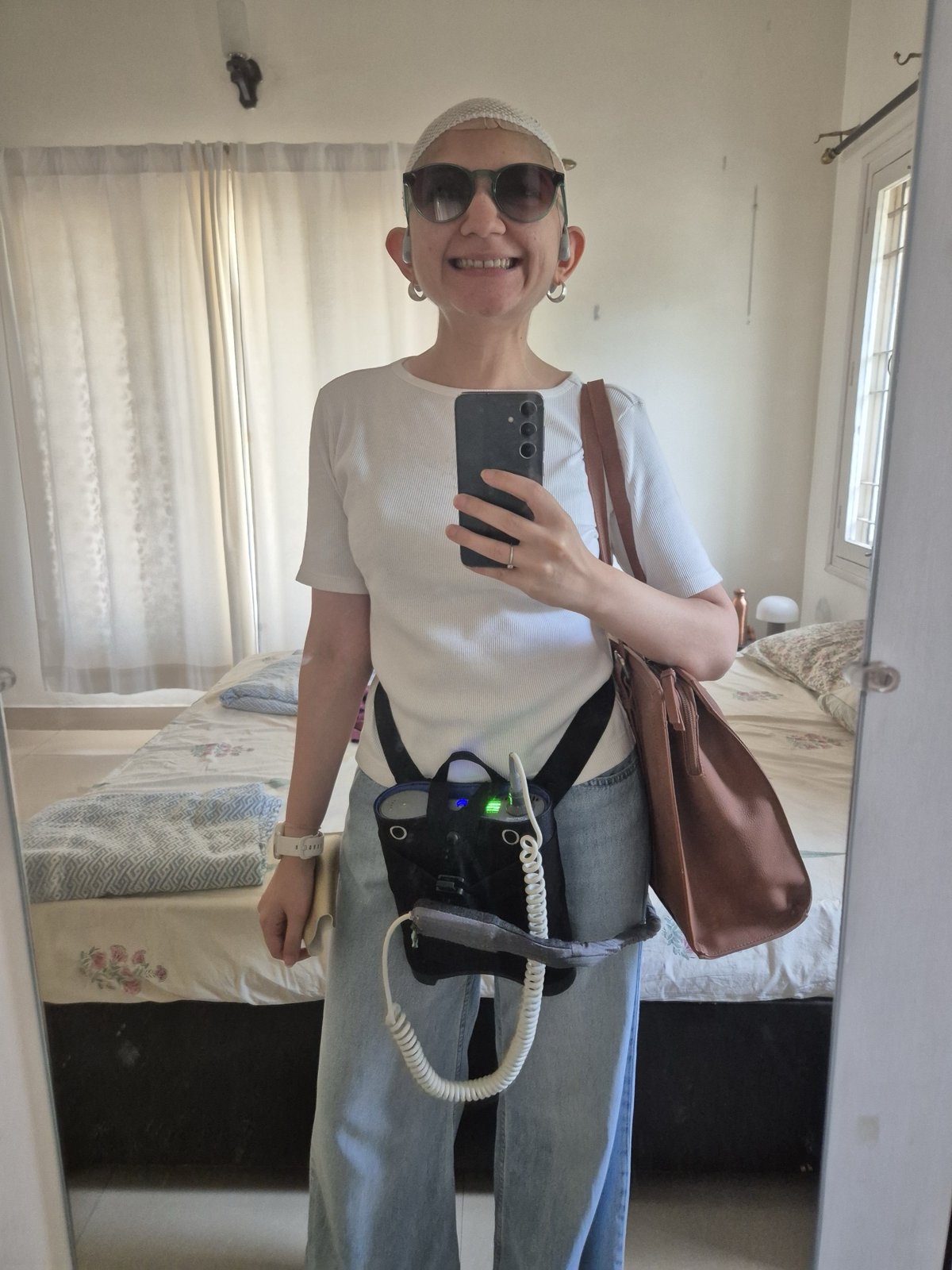
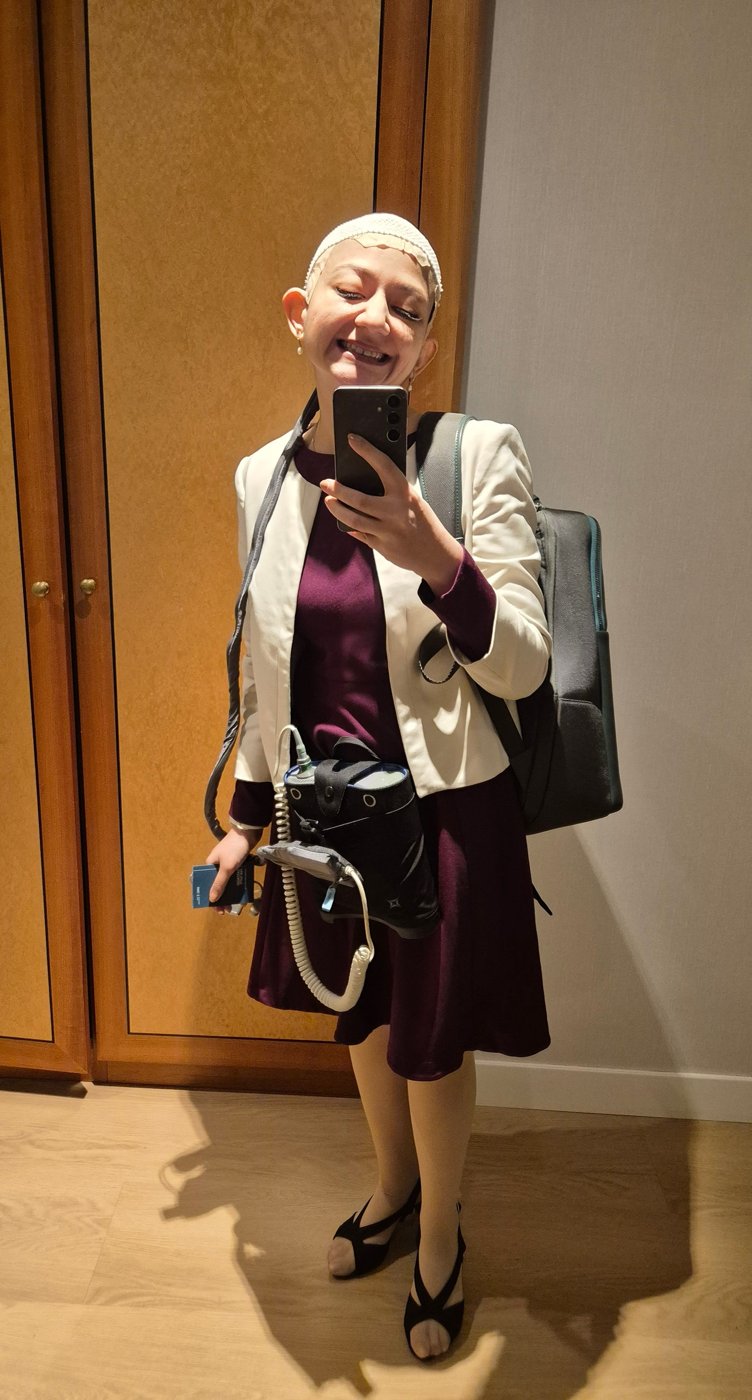
I was so fortunate to be able to explore options beyond standard of care. Optune was a bright ray of hope, with it being completely non-invasive and having minimal side effects, limited to the scalp. Of course, it was a major decision, and there were several questions. How do you live with a permanent attachment to your body, pretty much 24/7? How would I sleep peacefully? How compromised a lifestyle would it be? And above all, was the exorbitant cost worth it?
Dr. Williams was very encouraging and while he spoke about published evidence, he also encouraged me to join the Optune Support Group, where I connected with many people who had lived for years with Optune, defying prognosis. And then that was that. I didn't need more to know that it was, of course, something that I had to do. All early fears were set aside and I started my life with Optune.
It was undeniably intrusive initially. The arrays (Optune's adhesive patches) needed to be in close contact with the scalp for the low-intensity electric current to pass evenly through the electrodes. As my hair would start to grow back, it would push the arrays away from the skin & the adhesive would wear off. This meant arrays had to be changed every 3-4 days. On warmer days or after sweating from a workout, the changes were even more frequent. It took a while for this routine to become a part of our life. My husband would help me shave my head and put the new arrays back on for me. It usually meant sparing at least a couple of hours given that I had to leave my skin bare for about an hour before putting them back on.
Taking care of my scalp became important. We figured out which shavers and creams worked best for my skin type since peeling back patches, even in the shower, would make the skin sensitive. While sores and bruises were sometimes inevitable, especially in the surgical area where the skin was much thinner, we tried our best to avoid them. Otherwise, it was back to art class - us cutting holes in the patches so the sores could be left open to heal. I was still luckier than several other Optune users who had more adverse skin reactions and had to leave the arrays off for longer durations.
Ironically, sleep was actually the easiest bit - I stayed plugged into a power outlet and didn't need any battery changes. What took some time was getting used to the most mundane daily tasks. Getting in and out of my clothes, getting used to how I looked, ignoring the constant staring, going to the loo with it and finding my way around things. I remember early days where I'd be sitting on the couch watching TV with my Optune "buddy" seated beside me. The doorbell would ring and I'd get up with a start, only to feel my wires pulling me back within a couple of steps. I'd go back, lift the device right up and carry it with me.
The kitchen was possibly the most annoying to get around - either I had it strapped on me and the weight would tire me out, or I'd place it on a counter and risk forgetting it and it slipping off. In the early days, wearing it would leave me with pain in my lower back within just a few minutes of standing - it definitely fuelled me enough to work on regaining my muscle mass lost from the extended chemo.
Throughout, I would try to push the boundaries and I'd ask, what can I not do with it? I started with trying to go out for runs, going to the gym. Even at home, I would keep the device by my side and manage to do my strength training exercises. Working from the office was completely feasible too, just needed a little bit of planning. I had to ensure I was carrying enough charged device batteries to last me through the day - each used to give about 4 hours. That was true for every outing - dinner with friends or even just a movie. The fact that I was able to do practically everything in my usual routine was incredibly empowering.
Travelling on multiple flights, whether for treatment or otherwise, was definitely one of the more nerve-wracking experiences, especially in the beginning. We patiently engaged in explanations, understanding fully well how intimidating the device looked to any 3rd person and shared various levels of documentation to satisfy everyone - check-in staff, security personnel and at times even the flying crew. Despite having taken over 40 flights over 2 years, I still had my worst-case scenario play out. In May'26, on my 1st work trip after diagnosis, I was denied to fly at the check in counter itself even though I had all my papers in place. I had to rebook a new set of flights immediately with a carrier I'd flown with more frequently so as to not miss my meetings. While it was extremely frustrating, I'd still managed to find a solution and not let it ruin my plans.
Eventually, it just became an extension of me. It gave me a constant sense of control - the fact that there was almost a 24/7 counter force against anything that would try and grow in my head again. I felt that was far more than any other treatment could give me. That's what continues to make it all worth it - my "buddy" and I are now joined at the hip.
← Back to all lived experiences